 Listicle
Best Car Audio Shop Clute: 2026 Buyer's Guide
Table of Contents
- What Separates the Best Car Audio Shop in Clute From the Rest
- Custom Car Audio Installation Cost: What Actually Drives the Price
- Car Audio System Upgrade Benefits You'll Hear on Day One
- Searching for Professional Car Stereo Installation Near Me? What to Ask Before You Book
- Vehicle Compatibility: Cars, Trucks, Motorcycles, and Everything on Wheels
- Warranty, Post-Installation Support, and Local Climate Durability
- Frequently Asked Questions
Last Updated: September 26, 2026
What Separates the Best Car Audio Shop in Clute From the Rest
Finding the best car audio shop Clute drivers trust starts with one question: does the shop treat your vehicle like a system or like a parts catalog? A great car audio shop is a specialist that matches components to your vehicle's electrical limits, cabin acoustics, and the way you actually listen. At Rollin Amped Audio and Customz, we've built our reputation on exactly that approach, working on bikes, cars, and trucks with the same level of care.
Motorcycle and Truck Experience Matters
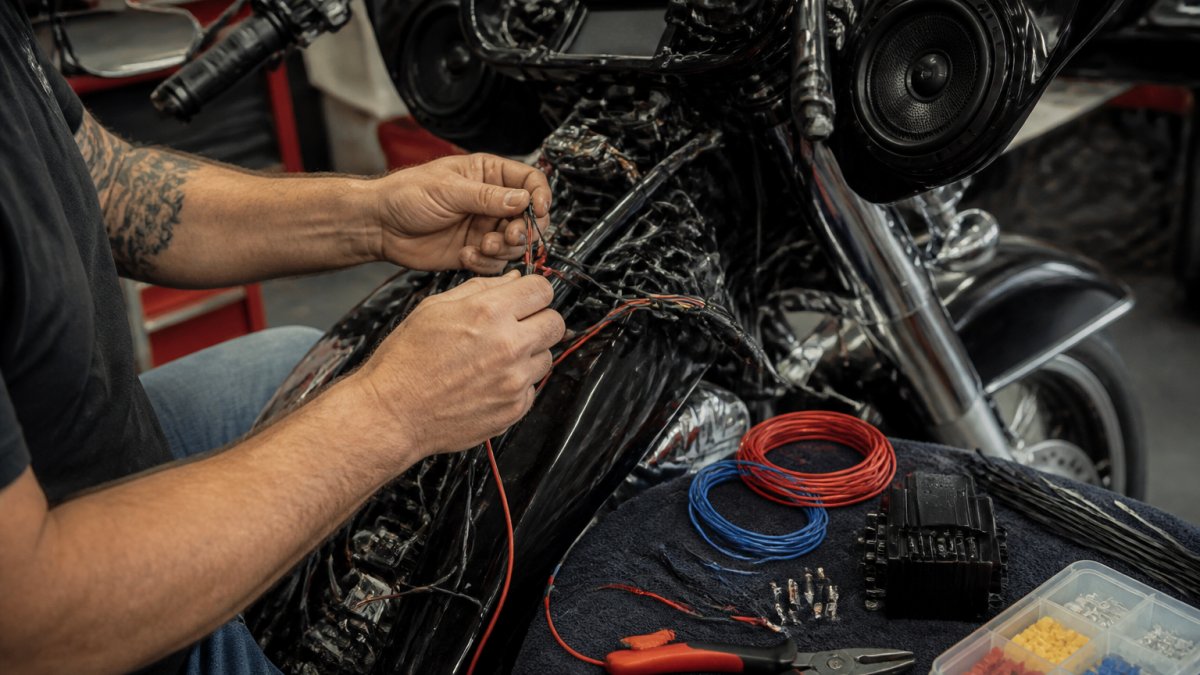
Motorcycles and trucks expose weak installs fast. A bike has minimal fairing space, a small charging system, and constant vibration. A truck cab has its own acoustic quirks that reward careful speaker placement.
Certifications, Reviews, and Real Build Photos
Credentials and proof beat promises. Look for manufacturer training, real customer reviews, and photos of completed builds, not stock images.
- Ask to see photos of motorcycle audio builds specifically
- Read reviews for how a shop handles problems, not just finished jobs
- Confirm the shop works with your vehicle type before booking
Custom Car Audio Installation Cost: What Actually Drives the Price
Custom car audio installation cost depends on labor complexity, parts quality, and how much of your vehicle has to come apart, not on a flat rate. Pricing varies by vehicle and build, so any shop quoting a number before seeing your ride is guessing.
The biggest cost drivers:
- Labor hours: Motorcycles and complex dashboards take longer than a standard sedan
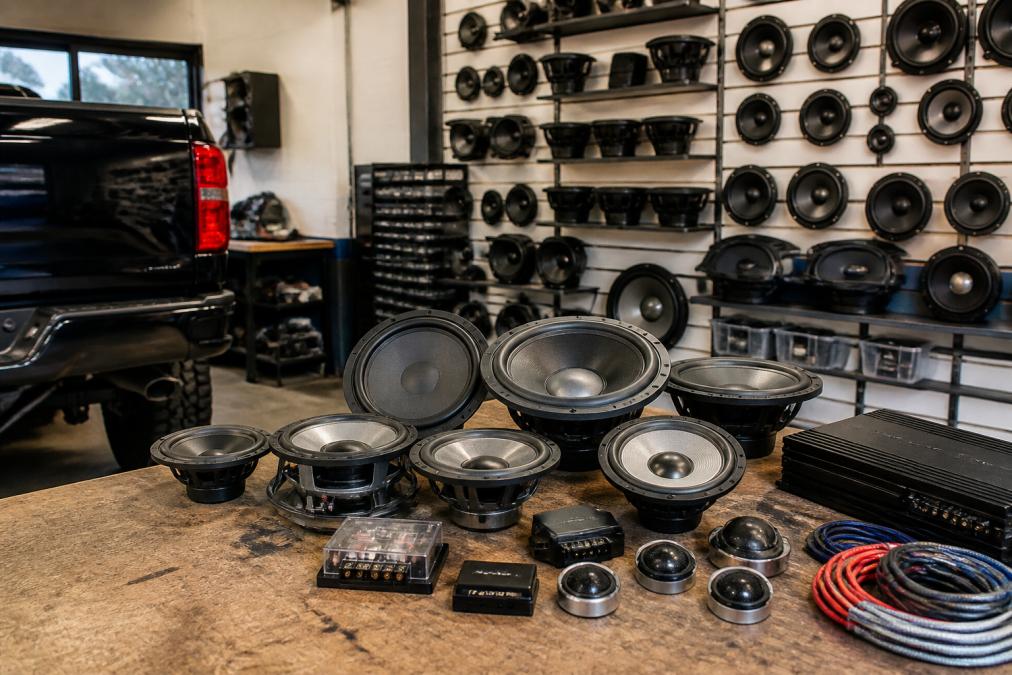
- Parts tier: Entry-level coaxial speakers versus component speakers with separate tweeters and crossovers
- Sound deadening: Adding damping material to doors and panels is labor-intensive but transforms bass response
- Electrical work: Amplifier installs may require wiring harness upgrades or a higher-output charging setup
DIY vs. Professional Installation: A Cost-Benefit Breakdown
DIY saves on labor but risks expensive mistakes. Professional installation costs more upfront and protects your vehicle, your warranty, and your resale value.
| Factor | DIY | Professional Install |
|---|---|---|
| Upfront cost | Lower (parts only) | Higher (parts + labor) |
| Risk of damage | High on trim, wiring | Low with proper tools |
| Sound tuning | Trial and error | Measured and tuned |
| Warranty coverage | None on labor | Shop-backed work |
| Best for | Simple speaker swaps | Amplifiers, subs, full builds |
Car Audio System Upgrade Benefits You'll Hear on Day One
Car audio system upgrade benefits show up immediately: cleaner mid-range clarity, tighter bass response, and better treble definition at every volume level. The difference between a stock system and a properly tuned aftermarket setup is not subtle.
Here's what changes first:
- Vocals and instruments separate instead of blending into mush
- Bass hits with control instead of distortion
- Bluetooth connectivity and Apple CarPlay integration make daily driving easier
- Sound deadening reduces road noise so you hear more music, not traffic
Searching for Professional Car Stereo Installation Near Me? What to Ask Before You Book
Professional car stereo installation near me searches usually end at the closest shop, not the best one. Distance matters, but a shop two miles away that guesses at your truck's wiring is a worse deal than a shop twenty minutes out that has already built three of your exact model. Use the questions below as a screening framework, not a script, the goal is to separate shops that diagnose from shops that just sell.
The Five Questions That Actually Sort Shops
- "Can you show me photos of a build on my make and model?" A shop that does repeat work on your platform will have them. A shop that doesn't will pivot to brand talk.
- "Will you tune the system after installation, or just wire it up?" Wiring gets sound out of the speakers. Tuning, setting gain, crossover points, and time alignment, is what makes it sound good. If tuning isn't in the quote, it isn't in the job.
- "What's your warranty on labor and on parts, and who handles a failure?" Labor warranty and parts warranty are two different things. Ask who files the claim if a component dies in month four.
- "How long will my vehicle be in the shop, and what happens if it runs long?" Complex dashboards and motorcycle fairings routinely take longer than a simple speaker swap. A shop that commits to a window in writing is a shop that has done the work before.
- "Can you integrate the gear I already have?" This is the question that trips people up. A good shop will work with your existing amplifier or head unit when it makes sense, not insist you rip everything out to sell a package.
Red Flags vs. Green Flags
| Signal | Red flag | Green flag |
|---|---|---|
| Estimate | Verbal only | Written, parts and labor separated |
| Photos | Stock images or brand logos | Completed builds on real vehicles |
| Tuning | "It'll sound great" | Specific process described |
| Warranty | "We stand behind our work" | Terms in writing, with a duration |
| Scheduling | Vague timeline | Realistic window with a buffer |
A common pattern is that the shop with the longest wait has the shortest list of complaints. Busy is not the same as slow, it often means the work is being done right the first time.
How to Compare Two Quotes Side by Side
When you have two written estimates, line them up by category rather than by bottom-line number:
- Labor hours, are they quoting the same job scope?
- Parts tier, entry-level coaxials versus component speakers with separate tweeters and crossovers are not the same product
- Sound deadening, is damping material included, or an upsell?
- Electrical work, does the quote include a wiring harness upgrade or charging system check if an amplifier is involved?
- Tuning time, is it a line item or an afterthought?
Vehicle Compatibility: Cars, Trucks, Motorcycles, and Everything on Wheels
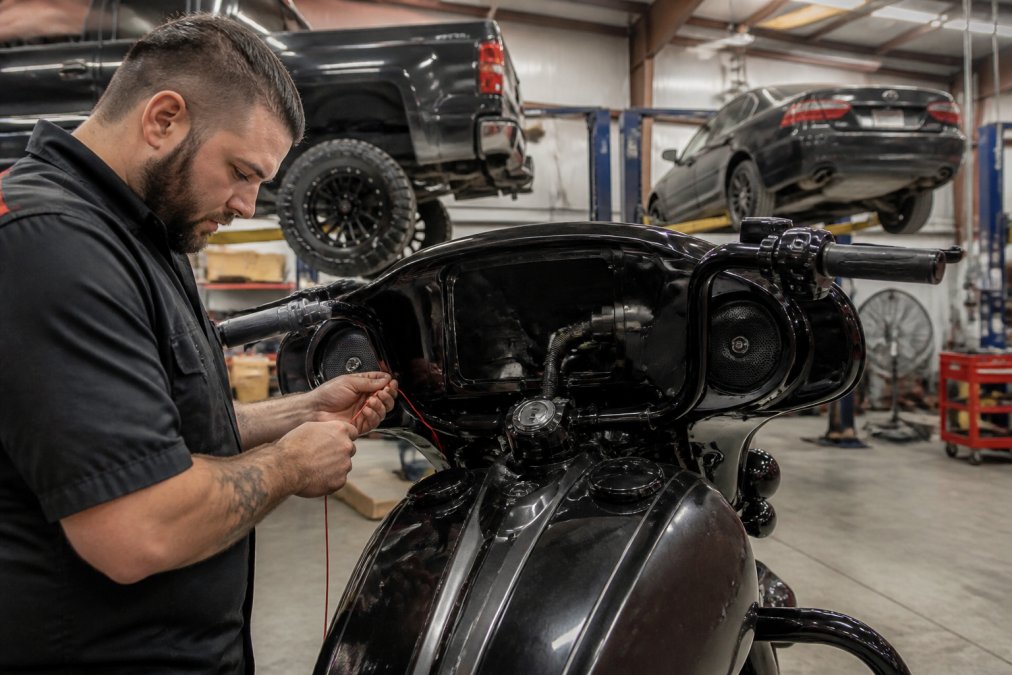
Vehicle compatibility determines what's possible before a single part is ordered. A head unit replacement that fits a truck dash may not exist for your motorcycle, and speaker sizes vary wildly across makes and models.
Warranty, Post-Installation Support, and Local Climate Durability
Warranty terms and climate durability decide whether your upgrade still sounds great in two years. This is the section most shop guides skip entirely, and it's the one that matters most on the Gulf Coast, where summer heat and year-round humidity work on your audio system every single day.
Why Heat and Humidity Are Hard on Car Audio
Heat and moisture attack an install in specific, predictable ways:
- Adhesives soften. Sound deadening butyl and enclosure sealants can sag or release when cabin temperatures climb well past 100°F in a parked vehicle. A door panel that buzzed in March may rattle by August.
- Connectors corrode. Unsealed crimps and exposed terminals oxidize faster in humid air, which raises resistance and can cause intermittent dropouts or amplifier faults.
- Wiring insulation ages. Cheap wire and thin insulation crack sooner under heat cycling, especially in engine-bay and door-jamb runs.
- Electronics run hotter. Amplifiers mounted in enclosed spaces without airflow derate or shut down in summer traffic.
What a Climate-Ready Install Looks Like
Ask whether the shop does these things. A shop that installs for this climate will answer without hesitating:
- Heat-shrink and seal every connection rather than relying on electrical tape, which dries out and unwinds
- Use marine-grade or tinned wire on motorcycle and exposed runs where moisture is a factor
- Mount amplifiers with airflow in mind, not buried behind a panel with no ventilation
- Apply sound deadening with a roller so it bonds fully, not just pressed on by hand
- Seal door and panel penetrations where humidity can reach the back of a speaker
Warranty: What to Confirm Before You Leave
Warranty terms vary by shop, so get the answers in writing:
- Labor warranty: How long is the work covered, and what voids it? Common void triggers include customer-supplied parts, DIY tampering, and unrelated electrical faults.
- Parts warranty: Who handles a failed component, you or the shop? Manufacturer warranties often require the shop to file the claim.
- Post-install support: Can you come back for tuning adjustments? Speakers and subwoofers break in over the first few weeks, and a good shop will re-tune at no charge.
- Moisture protection: Are connections sealed against humidity? This is the question that separates a coastal installer from a generic one.
The Post-Installation Relationship
The best shops treat the install as the start of a relationship, not the end of a sale. That means:
- A follow-up tuning visit after break-in
- A clear answer on how to reach them if something fails
- Honest guidance on what to upgrade next, rather than an upsell on day one
Frequently Asked Questions
What should I look for when choosing a car audio shop?
Look for a shop that shows real build photos, especially of your vehicle type. Ask whether they fabricate custom speaker enclosures and how they handle wiring harnesses and dash kits. Confirm they offer a written warranty and post-installation support. A shop experienced with motorcycles, trucks, and cars will understand the electrical and space differences each one brings. Reviews and a willingness to answer technical questions before you book are good signs.
How much does a custom car audio installation cost?
Custom car audio installation cost depends on your goals, vehicle, and equipment. A head unit replacement with a dash kit and wiring harness sits at one end of the range; a full system with component speakers, subwoofer integration, amplifier tuning, sound deadening, and signal processors sits at the other. Labor varies with how much fabrication your vehicle needs. Request a quote from the shop so the estimate reflects your specific build.
Can a shop install equipment I purchased elsewhere?
Many shops will install customer-supplied gear, but ask first. Some only warranty installation labor on parts they sell, and compatibility issues with head units, amplifiers, or speakers can shift the labor estimate. Bring your equipment list and vehicle details to the conversation. A shop that inspects your existing aftermarket accessories before quoting can tell you what stays, what needs replacing, and what will not work with your electrical system.
Do car audio shops offer financing for upgrades?
Financing options vary by shop, so ask directly when you request a quote. Some offer payment plans through third-party lenders, while others expect full payment at pickup. If budget is the deciding factor, break the build into phases: start with a head unit replacement or amplifier tuning, then add subwoofer integration or component speakers later. Phased builds let you hear improvements sooner without committing to the full system at once.