 ultimate-guide
Benefits of Professional Ceramic Coating
Table of Contents
- What Professional Ceramic Coating Actually Does to Your Paint
- Key Benefits of Professional Ceramic Coating for Your Vehicle
- Ceramic Coating vs Wax Durability: Why the Difference Matters
- How Long Does Ceramic Coating Last on a Daily Driver?
- Paint Correction Before Ceramic Coating: Why Prep Decides the Result
- What Ceramic Coating Won't Do (And Where DIY Kits Fall Short)
- Is Professional Ceramic Coating Worth the Investment?
- Frequently Asked Questions
Last Updated: September 26, 2026
What Professional Ceramic Coating Actually Does to Your Paint
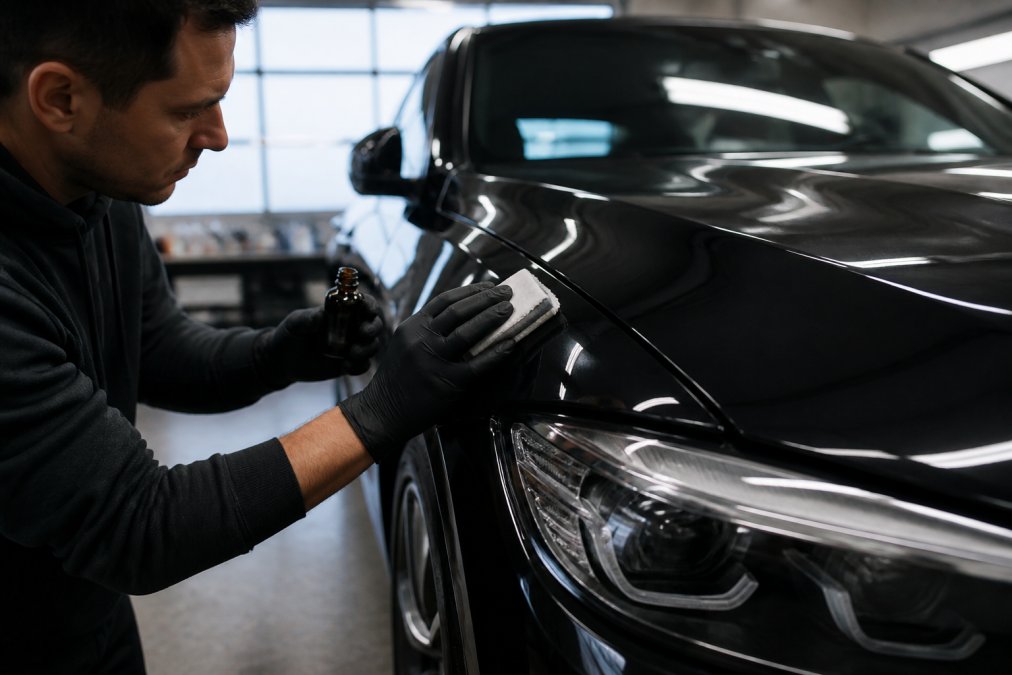
Professional ceramic coating is a liquid polymer applied to your vehicle's clear coat that chemically bonds with the paint to form a semi-permanent protective layer. Unlike wax, which sits on top of the surface, this coating creates a sacrificial barrier that resists UV damage, chemical stains, and environmental contaminants for years rather than weeks.
Key Benefits of Professional Ceramic Coating for Your Vehicle
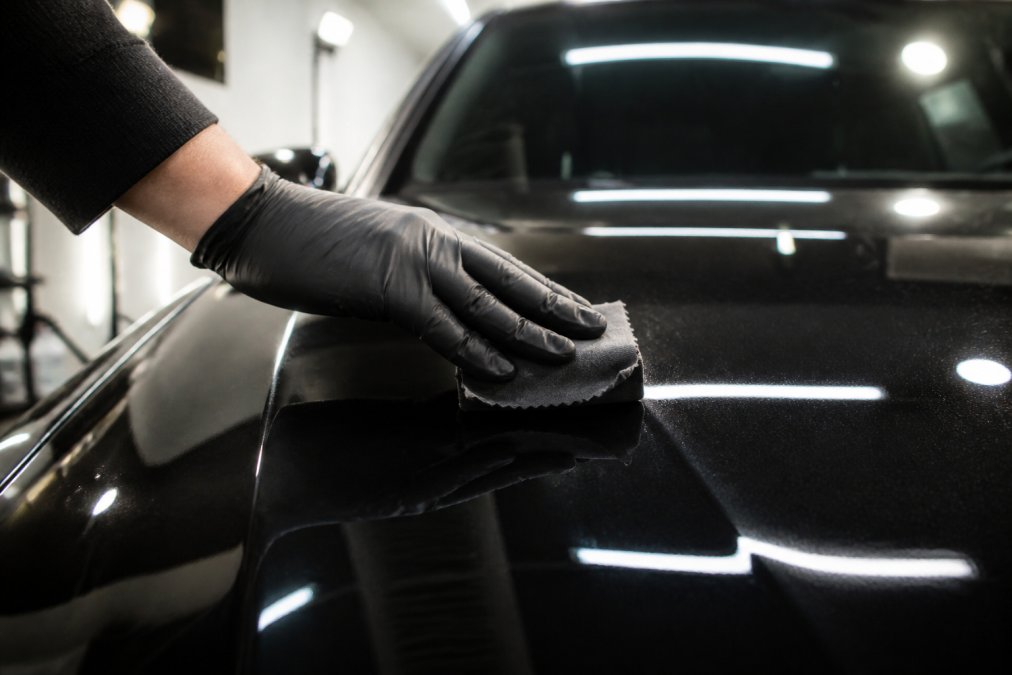
The benefits of professional ceramic coating extend far beyond a shiny finish. The coating delivers measurable improvements in how your paint handles everything from bird droppings to road salt, and it changes your maintenance routine from weekly waxing to occasional washing.
Hydrophobic Self-Cleaning Effect and Easier Maintenance
The hydrophobic surface created by a ceramic coating causes water to bead and sheet off rapidly, carrying dust and light debris with it. This self-cleaning effect means fewer washes and less scrubbing, which is where most swirl marks come from in the first place.
UV, Chemical, and Contaminant Resistance
UV resistance is where professional-grade coatings separate themselves from spray-on alternatives. The ceramic layer absorbs and reflects UV radiation that would otherwise oxidize your clear coat, causing fading and that chalky white haze on older paint.
- Bird droppings: acidic and hot, they can etch clear coat in hours without protection
- Tree sap: bonds aggressively and requires solvents to remove from bare paint
- Road salt: accelerates oxidation and corrosion, especially on rocker panels and wheel arches
- Industrial fallout: microscopic metal particles that embed in paint and rust over time
Ceramic Coating vs Wax Durability: Why the Difference Matters
Ceramic coating versus wax durability comes down to chemistry. A quality carnauba wax lasts a few weeks to a couple of months depending on conditions, while a professional ceramic coating can deliver years of protection from a single application.
| Protection Type | Typical Durability | Maintenance Frequency | Contaminant Resistance |
|---|---|---|---|
| Carnauba wax | Weeks to a few months | Reapply every 4-8 weeks | Low |
| Synthetic sealant | Several months | Reapply 2-3 times yearly | Moderate |
| DIY ceramic kit | Months to a year | Reapply annually | Moderate |
| Professional ceramic coating | Several years | Annual inspection wash | High |
How Long Does Ceramic Coating Last on a Daily Driver?
A professional ceramic coating typically lasts several years on a daily driver, though the exact lifespan depends on the product tier, application quality, and how the vehicle is stored and washed. Garage-kept vehicles with careful maintenance consistently outlast those parked outside and run through automatic brush washes.
The variables that shorten coating life are predictable:
- Harsh washing: brush tunnels and abrasive towels wear through the coating faster than anything else
- Environmental load: coastal salt air, heavy industrial areas, and intense sun all accelerate degradation
- Application quality: a coating applied over contaminated or uncorrected paint fails early, every time
- Product tier: professional-grade coatings with higher SiO2 content generally outlast entry-level options
Paint Correction Before Ceramic Coating: Why Prep Decides the Result
Paint correction before ceramic coating is not optional. The coating locks in whatever is underneath it, so swirl marks, scratches, and oxidation that exist before application will be sealed under a glossy layer that makes them more visible, not less. A coating is a clear, high-gloss magnifier, it doesn't hide defects, it spotlights them.
The Prep Sequence, Step by Step
Professional prep follows a fixed order, and skipping any stage compromises the bond:
- Wash and strip. A thorough hand wash removes surface dirt, and a strip wash or diluted isopropyl alcohol wipe removes any existing wax, sealant, or silicone-based dressing that would prevent the coating from bonding.
- Chemical decontamination. An iron remover dissolves embedded ferrous particles, the microscopic metal bits from brake dust and industrial fallout that feel like sandpaper on the paint. These particles rust over time and will lift the coating from underneath if left in place.
- Mechanical decontamination. A clay bar or clay mitt pulls out the remaining bonded contaminants that chemicals can't dissolve. The paint should feel glass-smooth after this step.
- Machine polishing. This is the correction stage. A dual-action or rotary polisher with the appropriate pad and compound removes swirl marks, light scratches, and oxidation. Heavier defects may require a two-stage compound-and-polish process.
- Panel wipe. An isopropyl alcohol or dedicated panel-prep wipe removes polishing oils and residue so the coating bonds to bare, clean clear coat rather than to a layer of lubricant.
- Coating application. Only now does the coating go on, in controlled sections, leveled with a suede applicator, and allowed to flash before buffing.
Why Each Step Matters
Skipping chemical decontamination leaves iron particles that rust and lift the coating. Skipping clay leaves a surface the coating can't fully wet out, which causes uneven bonding and premature failure. Skipping polishing seals in defects. Skipping the panel wipe leaves oils that prevent cross-linking. Each step exists because the one after it depends on it.
The Curing Window
After application, most professional coatings need to stay dry and dust-free for a specific window, often 24 hours before any moisture exposure and up to a week before the first wash, while they cross-link and harden. Humidity and temperature during this window affect the cure. Rushing it, or exposing the vehicle to rain or dew too early, compromises the bond and shortens the coating's life.
What This Means for DIY
A DIY kit can work, but the prep is where home applications most often fall short. Without a polisher, proper pads, iron remover, clay, and a dust-controlled space, the coating is being applied over a surface that isn't ready for it. That's not a product failure, it's a prep failure, and it's the main reason professional installations consistently outlast DIY ones.
What Ceramic Coating Won't Do (And Where DIY Kits Fall Short)
Ceramic coating will not make your paint scratch-proof, stop rock chips, or eliminate the need to wash your car. It reduces the frequency and effort of maintenance, but it is a protective layer, not armor.
DIY kits fall short in three predictable ways:
- Incomplete prep: most home applications skip proper decontamination and correction
- Inconsistent coverage: high spots and missed areas lead to uneven curing and premature failure
- No controlled environment: dust, humidity, and temperature swings during application ruin the bond
Is Professional Ceramic Coating Worth the Investment?
Professional ceramic coating is worth it if you plan to keep your vehicle for several years, park it outside, or simply want to spend less time maintaining the finish. It's less compelling if you lease, flip vehicles frequently, or genuinely enjoy the ritual of regular waxing. The honest answer depends on a cost-benefit calculation most articles never actually run.
The Five-Year Ownership Math
Start with what waxing actually costs you. A quality carnauba wax or synthetic sealant runs roughly $15 to $40 per container, and a typical vehicle needs a full reapplication every four to eight weeks depending on sun exposure and washing habits. Over five years that's somewhere between 30 and 60 applications. Even at the low end, you're buying product 30 times, plus applicator pads, microfiber towels, clay bars, and the occasional bottle of tar remover.
What Actually Tips the Math
Three variables decide whether the coating wins on cost:
- How long you keep the vehicle. Under two years, the coating rarely pays back. Past four or five years, it usually does.
- How the vehicle is stored. A garage-kept car extends coating life and reduces the wash frequency that wears wax down faster.
- How you value your time. If you'd otherwise pay a detailer for quarterly wax service, the coating math gets dramatically better.
A common pattern among owners who track this: the break-even point on a professional coating versus DIY waxing tends to fall somewhere in the second or third year of ownership, after which the coating is effectively free protection for the remainder of its rated life.
The Resale and Condition Angle
Paint condition is one of the first things a buyer or trade-in appraiser notices. A vehicle with intact clear coat, no oxidation, and no swirl marks commands more than an identical one with chalky, faded paint, and repainting a single panel costs far more than a coating ever would. That resale premium is hard to quantify precisely, but it's real, and it stacks on top of the maintenance savings.
The Environmental Angle
Fewer washes mean less water and fewer chemical soaps running into storm drains. A coating that lasts several years replaces dozens of wax applications, each with its own plastic packaging, applicator waste, and runoff. For owners in regions with water restrictions or strict stormwater rules, that reduction is a practical benefit, not just a talking point.
Warranty and Insurance Implications
Some professional coatings come with manufacturer-backed warranties that require documented maintenance, keep your receipts and follow the care schedule or the warranty is void. On the insurance side, a coating is typically treated as a vehicle improvement or custom equipment, so check whether your policy covers it in the event of a claim. Many standard policies won't pay to reapply a coating after a covered collision unless it was specifically scheduled or endorsed.
Frequently Asked Questions
What is the downside of professional ceramic coating?
The main downsides are upfront cost and the prep work required. Professional ceramic coating needs paint correction first, so the vehicle may be in the shop for a day or more. It also will not stop rock chips or deep scratches, and it needs periodic maintenance washes to keep performing. If your clear coat is already failing or peeling, coating it will not fix the problem. Ask your installer to inspect the paint before you commit.
Can I take my car through an automatic car wash with ceramic coating?
Touchless automatic washes are generally acceptable, but brush-style tunnels can mar the surface over time. The abrasive brushes drag grit across the coating and can leave swirl marks, even on a coated car. A maintenance wash with pH-neutral soap, two buckets, and a soft microfiber mitt keeps the hydrophobic layer working as intended. If you use a drive-through, choose a touchless option and skip the wax add-ons, which can sit on top of the coating.
Does professional ceramic coating prevent rock chips and deep scratches?
No. Ceramic coating adds a thin, hard layer that resists light swirling and wash marks, but it is not a substitute for paint protection film. Rocks kicked up on the highway and keys dragged across a door will still reach the clear coat. If impact protection is your priority, film goes on first and coating goes over it. Coating handles chemical resistance, UV resistance, and the self-cleaning effect; film handles physical impact.
How does professional ceramic coating differ from DIY kits?
Professional-grade coatings use higher concentrations of SiO2 and silica dioxide in a ceramic matrix that bonds harder and lasts longer, often several years with proper care. DIY kits are formulated for easier application, which usually means lower solids content and a shorter lifespan. The bigger gap is surface preparation: a pro shop performs paint correction, decontamination, and an IPA wipe before applying. Skipping those steps traps defects under the coating permanently.
Your paint faces UV, chemicals, and contaminants every day it sits outside, and wax simply can't keep up with that load. Rollin Amped Audio and Customz installs professional ceramic coatings alongside custom paint and wraps, so your vehicle gets protection and style from one team that works on cars, trucks, and motorcycles alike. Newsletter subscribers get 10% off their first service. Request a quote from Rollin Amped Audio and Customz and give your paint the protection it actually needs.